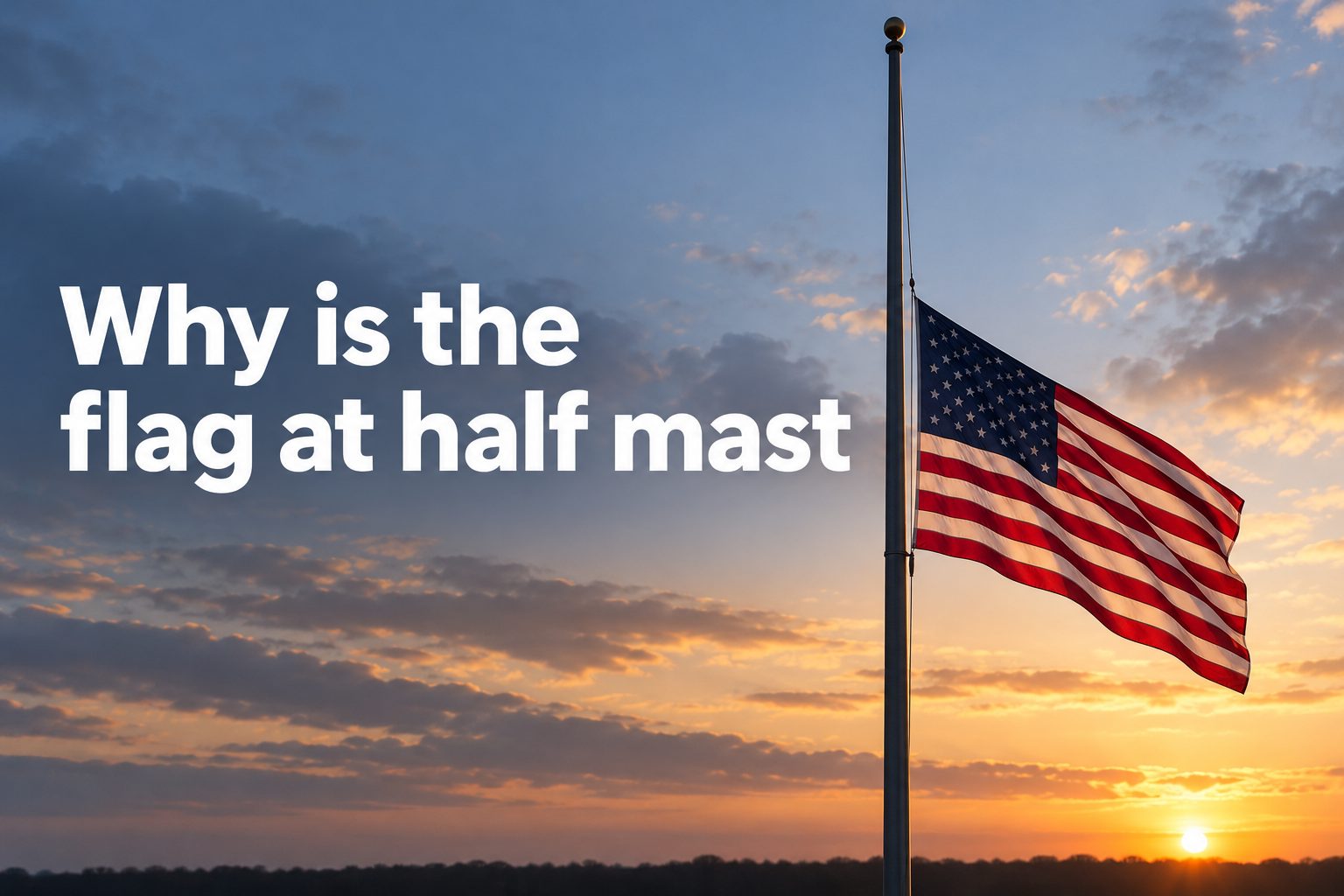
If you are asking, “Why is the flag at half mast?” you are seeing a public sign of mourning, respect, and shared remembrance. A lowered flag tells people that a nation, community, organization, or institution is honoring someone who has died or recognizing a tragic loss. It communicates a serious message without needing a speech or announcement.
The tradition is simple to notice but carries deep meaning. Flags may be lowered after the death of a national leader, military member, public official, emergency worker, or respected local figure. They can also be displayed this way after disasters, acts of violence, or other events that affect a large community.
The exact rules can differ by country, state, city, school, workplace, or private organization. Learning the reason behind a half-mast display helps people respond thoughtfully, follow flag etiquette, and appreciate why this visible symbol remains important.
The phrase “half mast” usually refers to a flag on a ship, while “half staff” is often used for a flag displayed on land. In everyday conversation, many people use the terms interchangeably. Both describe a flag positioned below the top of its pole as a sign of mourning.
The flag is not normally placed exactly halfway down the pole. Traditional flag etiquette often calls for raising it fully to the top first and then lowering it to the half-mast or half-staff position. This brief movement shows that the flag is lowered deliberately and respectfully.
A common explanation is that the space above the flag is reserved for an invisible flag of death. Whether viewed as a formal tradition or a symbolic gesture, the lowered position represents grief while allowing the national flag to remain visible and honored.
Half-mast displays can be ordered by a national leader or another authorized official. Governors, mayors, military commands, schools, businesses, and community groups may also issue local notices when a loss directly affects the people they serve.
Because the reason may be national, regional, or local, the answer is not always obvious from the flag alone. Checking a reliable announcement from the relevant government, institution, or organization is the best way to learn whom the display honors and how long it should remain in place.
Why Is the Flag at Half Mast Today?
National Mourning Orders
A national leader may direct flags to fly at half mast after the death of a former or current leader, a major public figure, or a person whose service affected the country. These orders create a shared period of mourning and usually state the dates, locations, and flags covered by the proclamation.
Military Losses
Flags are often lowered to honor service members who die while serving their country. A national order may follow a major loss, while military bases and local communities may observe their own memorial periods. The display recognizes sacrifice and gives civilians a visible way to show respect.
Deaths of Public Officials
The death of a governor, mayor, judge, legislator, police chief, or other public official can lead to a half-mast order. The length of the observance often reflects the person’s role and the rules of the jurisdiction. Local flags may be lowered even when there is no nationwide order.
First Responder Tributes
Police officers, firefighters, paramedics, and other emergency workers may be honored with flags at half mast after a line-of-duty death. Stations, public buildings, schools, and businesses may participate because the loss is felt widely across the community and among people who relied on that service.
Victims of Tragedy
After a mass casualty event, natural disaster, accident, or act of violence, authorities may lower flags to acknowledge victims and support grieving families. This use of the flag turns public space into a quiet memorial and signals that the event has affected more than the people directly involved.
Memorial Dates
Some countries and communities observe established remembrance days each year by lowering flags. These dates may honor military members, victims of historic events, or groups whose service and sacrifice deserve public recognition. The observance is planned, but its message of respect remains sincere.
Local Community Decisions
A school district, sports club, workplace, or neighborhood may lower its flags after the death of a student, employee, volunteer, or community leader. These displays are not always part of official government protocol, yet they can be meaningful because they recognize a direct and personal connection.
What Does a Half Mast Flag Mean?
1. It is a visible expression of mourning that lets many people recognize a loss at the same time, even when they do not know the details immediately.
2. It shows respect for a person, group, or community affected by death, service-related sacrifice, or a serious tragedy.
3. It creates a shared civic response. Public buildings, schools, and businesses can participate in a simple act of remembrance without making the moment political or personal.
4. It encourages people to pause, learn what happened, and consider the impact on families, colleagues, and neighbors who are grieving.
5. It preserves a longstanding ceremonial tradition that connects present-day mourning with customs used by governments, military organizations, and communities for generations.
How to Display a Flag at Half Mast
- Check the authority: Confirm whether a national, state, local, or organizational order applies before changing the flag position. Official notices normally identify the reason and the dates of observance.
- Raise it fully first: When using standard ceremony, raise the flag briskly to the top of the pole before lowering it to the half-mast position. This step distinguishes the display from an improperly raised flag.
- Lower it with care: Move the flag to the designated position slowly and securely. It should remain clearly visible, should not touch the ground, and should not become tangled around the pole or hardware.
- Follow the stated dates: Return the flag to full staff when the authorized mourning period ends. A flag left lowered beyond the announced period can cause confusion and may overlook the intended protocol.
- Consider local rules: Schools, businesses, homes, and community organizations may have policies that supplement public flag guidance. Use the policy that applies to the flag and location under your control.
- Use respectful alternatives: If a pole cannot safely display a flag at half mast, a black mourning ribbon or another approved sign of remembrance may be used according to local custom or organizational guidance.
Common Half Mast Flag Mistakes to Avoid
Assuming Every Display Is National
A half-mast flag does not always mean there is a national emergency or nationwide proclamation. It may honor someone in a city, school, workplace, or service organization. Avoid spreading assumptions before checking announcements from the location where the flag is displayed.
Calling the Position Exactly Halfway
The phrase is symbolic, but the correct position is not always the literal middle of the pole. Established guidance may specify a particular distance below the top. Following the applicable protocol is more respectful than guessing based only on the name.
Skipping the Full Raise
Lowering a flag directly from a stored or lower position can miss an important ceremonial step. In customary practice, the flag reaches full staff first and is then lowered. The same idea applies at the end of the observance when it is raised before being removed.
Leaving Other Flags Improperly Positioned
When several flags share a location, their treatment can depend on the flag code or local rules. Do not assume every flag should be handled identically without checking guidance. A coordinated display should preserve the required order of precedence and show clear respect.
Using Half Mast for Ordinary Decoration
A lowered flag is a mourning symbol, not a design choice for an event, sale, or general solemn atmosphere. Using it casually weakens the meaning for people who are grieving and can create unnecessary offense or public confusion.
Ignoring Weather and Safety
Respectful display also requires practical care. A damaged pole, severe weather, loose ropes, or an unsecured flag can create hazards and result in a flag touching the ground. Follow safety procedures while carrying out the observance with dignity.
Sharing Unverified Reasons
People often ask why the flag is at half mast and may repeat the first explanation they hear. Before posting or telling others, confirm the reason through an official source or the organization responsible for the property. Accurate information honors the person or event being remembered.
A flag at half mast is a quiet but powerful signal of mourning, remembrance, and public respect. It may honor a national leader, service member, first responder, community member, or victims of a tragic event.
The reason and rules can vary by location, so the most useful response is to check the appropriate official or organizational notice. That helps distinguish national observances from state, local, school, or workplace tributes.
Knowing the meaning behind the display makes the gesture more than a visual detail. It offers a moment to pause, recognize loss, and show consideration for the people and communities affected.
FAQs About the Flag at Half Mast
Why Is the Flag at Half Mast Instead of Fully Lowered?
Keeping the flag visible while lowering it from the top preserves its dignity and makes the mourning signal clear. The lowered position represents grief and respect, while the flag itself continues to stand for the nation, community, or organization it represents.
Is Half Mast the Same as Half Staff?
They describe the same general mourning display, but usage often depends on location. Half mast traditionally refers to flags on ships, while half staff commonly refers to flags on land. Many people use either phrase in ordinary conversation without causing confusion.
Who Decides When Flags Fly at Half Mast?
The decision may come from a national leader, governor, mayor, military authority, or another official body. Private organizations and local institutions can also lower their own flags to honor someone connected to their community, provided they follow any applicable local rules.
How Long Does a Flag Stay at Half Mast?
The length depends on the reason and the authority issuing the observance. It may last one day, continue until sunset, cover several days, or follow a specific ceremonial schedule. Official notices usually provide the start and end dates.
Can a Homeowner Fly a Flag at Half Mast?
Yes, a homeowner can generally lower a personal flag as a respectful sign of mourning. It is wise to follow recognized flag etiquette, especially by raising the flag to full staff before lowering it and by keeping it clean, secure, and off the ground.
What Should I Do When I See a Flag at Half Mast?
There is no required personal action, but a respectful pause is appropriate. If you want to know the reason, check an official announcement from the relevant government or institution. Avoid guessing publicly, because the display may relate to a local loss or memorial.